

Presenting MetAmino kit and LipoEasy kit at analytica 2026

At analytica 2026 in Munich, we presented two recent developments linked to Chromservis. We introduced the updated MetAmino® kit for LC-MS and GC-MS analysis, which now includes 17 isotopically labelled internal standards and supports accurate analysis of more than 80 amino acids, polyamines and biogenic amines. We also used the occasion to present LipoEasy kit, … Read more

New study in Functional Ecology: Volatile cues shape predator attraction in willows

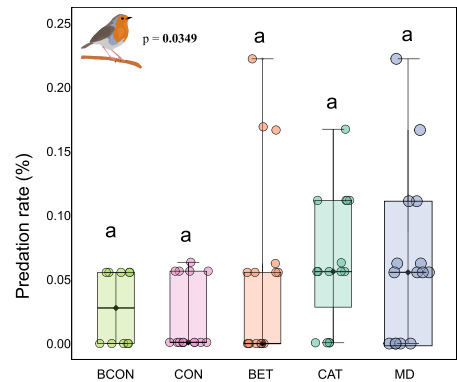
We are pleased to highlight a new collaborative study published in Functional Ecology. In the article, “Species-specific scents, targeted enemies: Volatile cues mediate predator attraction in willows,” the authors show that herbivore-induced volatile signals can shape predator attraction in a species-specific way. While inducible VOCs in Salix fragilis were linked to the recruitment of invertebrate predators, predator attraction in Salix cinerea was … Read more

New study in Nature Communications: Dietary fibre shapes tapeworm development

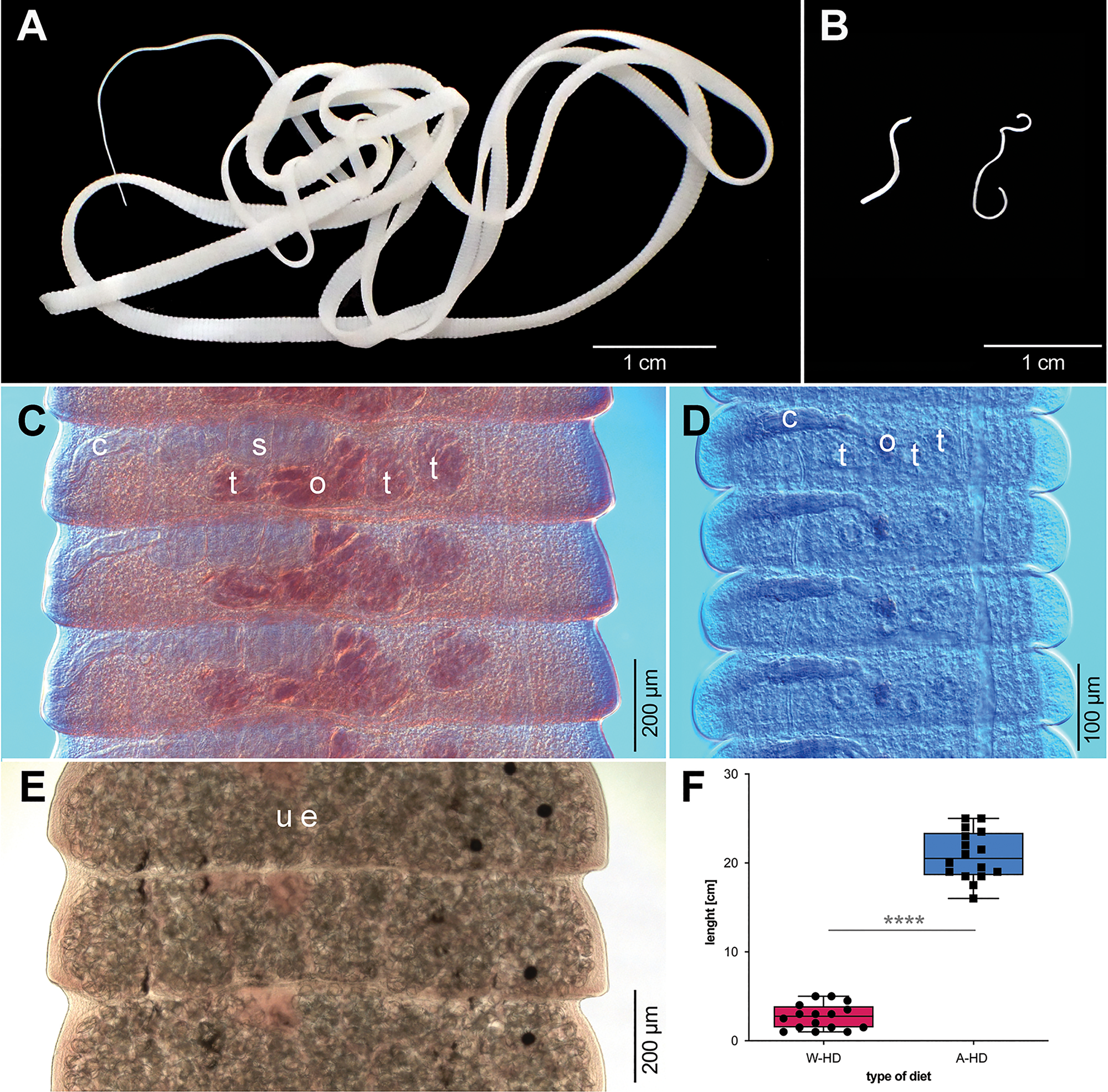
We are pleased to highlight a new collaborative study published in Nature Communications, co-authored by an international research team including Martin Moos from our laboratory. The article, “Developmental plasticity enables an intestinal tapeworm to adapt to dietary stress,” reveals how dietary fiber availability shapes the development, reproduction, and survival strategies of the intestinal tapeworm Hymenolepis diminuta. The study shows … Read more

New International Grant on Nutritional Immunology and Fungal Infections

We are pleased to announce a new Polish–Czech collaborative research grant focused on understanding how dietary fatty acids modulate immune responses to fungal infections. The project uses the wax moth Galleria mellonella as a well-established alternative infection model with strong relevance to mammalian innate immunity. The main goal of the project is to determine whether fatty acid supplementation can enhance host … Read more

New GAČR Project: Metabolic Energy Substrates in Avian Blood

Our laboratory is a co-investigator in the newly funded Czech Science Foundation project 26-22858S, led by MVDr. Oldřich Tomášek, Ph.D. from the Institute of Vertebrate Biology, Czech Academy of Sciences (IVB). The project team also includes collaborators from the Faculty of Science, Charles University. The project, “Metabolic energy substrates in avian blood: sources of variation, … Read more

New Review Publication on Insect Hormone Quantification and Manipulation

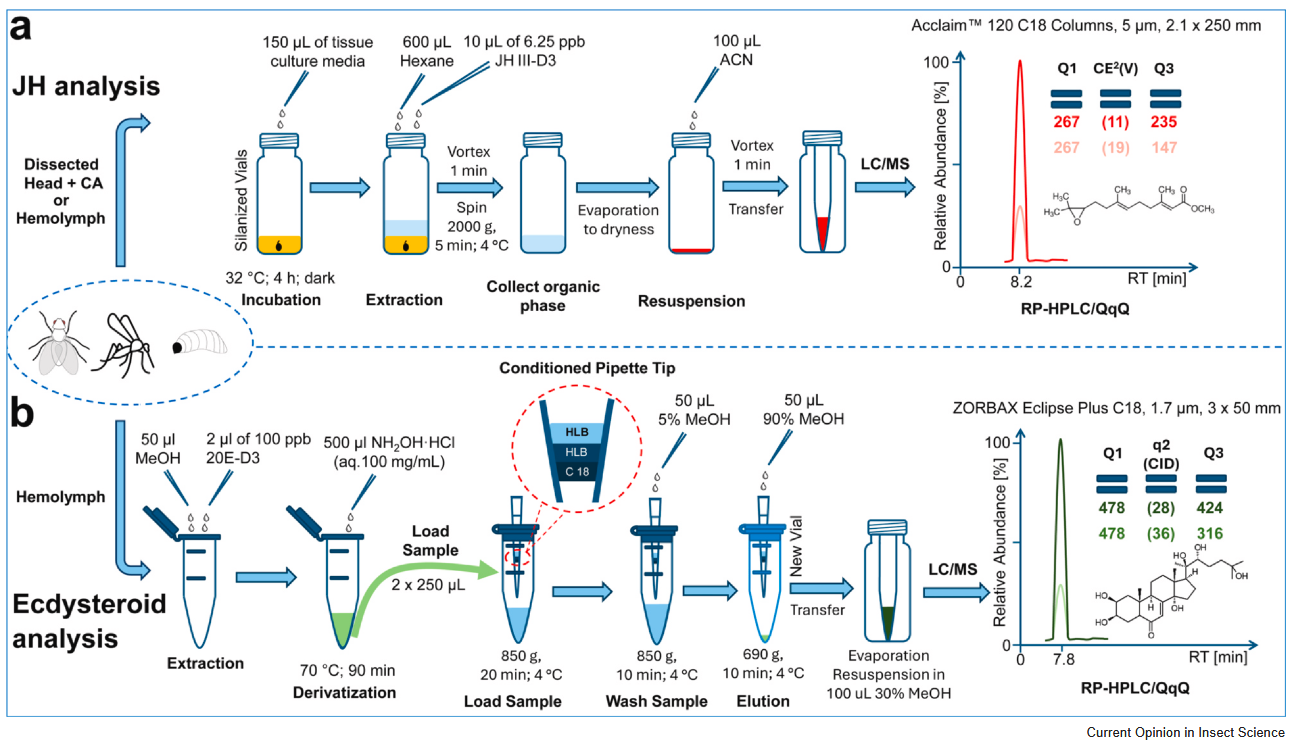
We are pleased to highlight a new collaborative review published in Current Opinion in Insect Science, co-authored with colleagues Fernando G. Noriega, Guy Bloch, Martin Moos, Petr Šimek, and Marek Jindra. The article, “Approaches to quantify and manipulate insect hormone signals,” provides an up-to-date overview of state-of-the-art methods used to study the key lipidic insect … Read more

New Collaborative Publication with the Algatech Centre: Cyanophycinase as a Key Regulator of Heterotrophy in Cyanobacteria

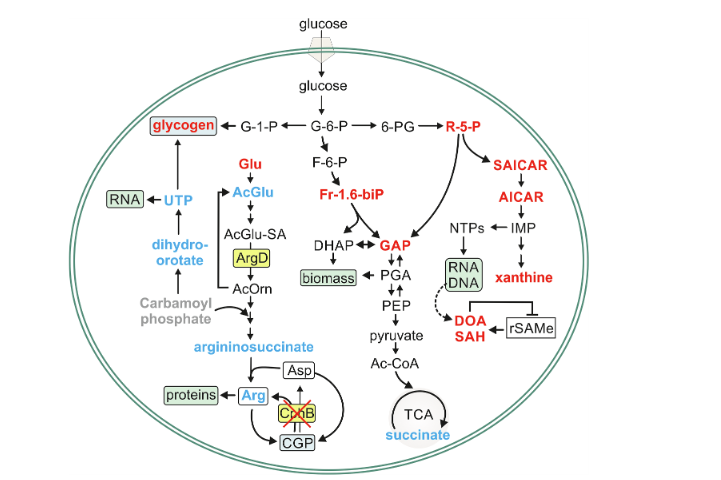
We are proud to share a new joint publication arising from our long-term collaboration with Roman Sobotka’s research group at the Algatech Centre (Institute of Microbiology, CAS). The study reveals a previously unknown role of cyanophycinase (CphB) in enabling heterotrophic growth in the model cyanobacterium Synechocystis sp. PCC 6803.

The Algatech team discovered that deleting the cphB gene completely blocks light-activated heterotrophic growth. To uncover the metabolic basis of this phenotype, our laboratory contributed targeted LC-HRMS metabolomics, which showed that CphB is essential for activating arginine biosynthesis and for maintaining a balanced carbon–nitrogen and nucleotide metabolism during the transition from photosynthesis to heterotrophy.

Together, the teams demonstrated that CphB interacts with the key arginine-pathway enzyme ArgD and stimulates cyanophycin degradation, revealing a tightly coordinated metabolic system unique to cyanobacteria.
We have organized 13th Conference of Czech Mass Spectrometry

195 participants registered, with 23 lectures, 14 short talks, and 55 posters presented. The event was held under the main organizational lead of Martin Moos. Prominent scientific figures and dozens of experts in mass spectrometry and proteomics arrived in České Budějovice to attend the 13th Conference of the Czech Society for Mass Spectrometry and the … Read more

Professor Alexander Makarov visited our laboratory

Professor Alexander Makarov visited our laboratory as part of the Conference of Czech Mass Spectrometry. During his visit, Professor Makarov was introduced to our ongoing research activities and the key instrumentation used in our projects. Members of our team had the opportunity to discuss current challenges in mass spectrometry and future directions in the field. … Read more

Adenosine is a sensor of a balance between cell activity and nutrient supply

How does a cell measure its current activity in order to ask its neighborhood for an adequate supply of nutrients? Pavla Nedbalova and Tomas Dolezal’s team from the Faculty of Science, University of South Bohemia, have found a possible mechanism where adenosin could be at the center. The discovery, The discovery, in which scientists from … Read more