
The Laboratory of Analytical Biochemistry and Metabolomics
Our research is primarily aimed at uncovering biochemical mechanisms underlying organismal responses to environmental and physiological challenges. We are a research group focused on developing and applying advanced bioanalytical methods to study metabolism across a broad range of organisms – from insects and cyanobacteria to plants and humans – with particular emphasis on polar metabolites, hormones, bioactive peptides, and volatile organic compounds.
We operate a broad range of analytical platforms for targeted and untargeted metabolomics, lipidomics, fluxomics, and related analyses, based on LC-MS and GC-MS technologies. These platforms support both our in-house research and collaborative projects within the interdisciplinary environment of the Biology Centre. LABM contributes to high-impact publications and translates its expertise into applied outputs. These include analytical kits, protocols, and workflows for broader scientific use. A flagship example is the MetAmino® kit for amino acid analysis, developed by LABM and marketed in collaboration with Chromservis (Prague, Czech Republic).
The group is led by Martin Moos and currently consists of 15 researchers and technical staff. We actively collaborate with national and international partners on research projects that benefit from our bioanalytical expertise and methodological innovation.
Latest publications
Karlínová I., et al. (2026) Heptafluorobutyl Chloroformate Derivatization Enables Molecular-Ion-Centric Metabolite Screening and Fluorine-Assisted Elemental-Composition Assignment by GC-APCI-HRMS. Analytical Chemistry
Renoult S., et al. (2026) Climate Shapes Elevational Gradients in Concentration, Composition, and Functional Diversity of Willow Metabolomes. Plant Cell and Environment
Petcharat P., et al. (2026) Diapause- and cold-induced remodeling of phospholipid composition in the biological membranes of the boreal fly, Drosophila lummei. Journal of Thermal Biology 139 : 104519.
Hajdušek O., et al. (2026) Disruption of chitin synthases impairs tick feeding and reproduction. Frontiers in Cellular and Infection Microbiology 16 : 1822003.
Javal M., et al. (2026) Integrative -omics approaches reveal mechanisms of combined heat stress and extreme hypoxia tolerance in a Cerambycid beetle larva. Journal of Experimental Biology 229 : jeb251552
News
- We organize 27th Conference of Czech Mass Spectrometry
 The 27th School of Mass Spectrometry will take place on 21–25 September 2026 in Frymburk, Czech … Read more
 - New publication in Analytical Chemistry
 Our new paper, “Heptafluorobutyl Chloroformate Derivatization Enables Molecular-Ion-Centric Metabolite Screening and Fluorine-Assisted Elemental-Composition Assignment by GC–APCI–HRMS,” has been … Read more
 - Presenting MetAmino kit and LipoEasy kit at analytica 2026
 At analytica 2026 in Munich, we presented two recent developments linked to Chromservis. We introduced the … Read more
 - New study in Functional Ecology: Volatile cues shape predator attraction in willows
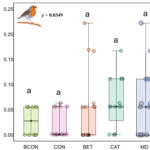 We are pleased to highlight a new collaborative study published in Functional Ecology. In the article, “Species-specific scents, … Read more
 - New study in Nature Communications: Dietary fibre shapes tapeworm development
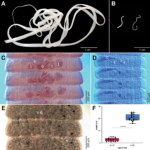 We are pleased to highlight a new collaborative study published in Nature Communications, co-authored by an international … Read more
 - New International Grant on Nutritional Immunology and Fungal Infections
 We are pleased to announce a new Polish–Czech collaborative research grant focused on understanding how dietary fatty acids modulate … Read more