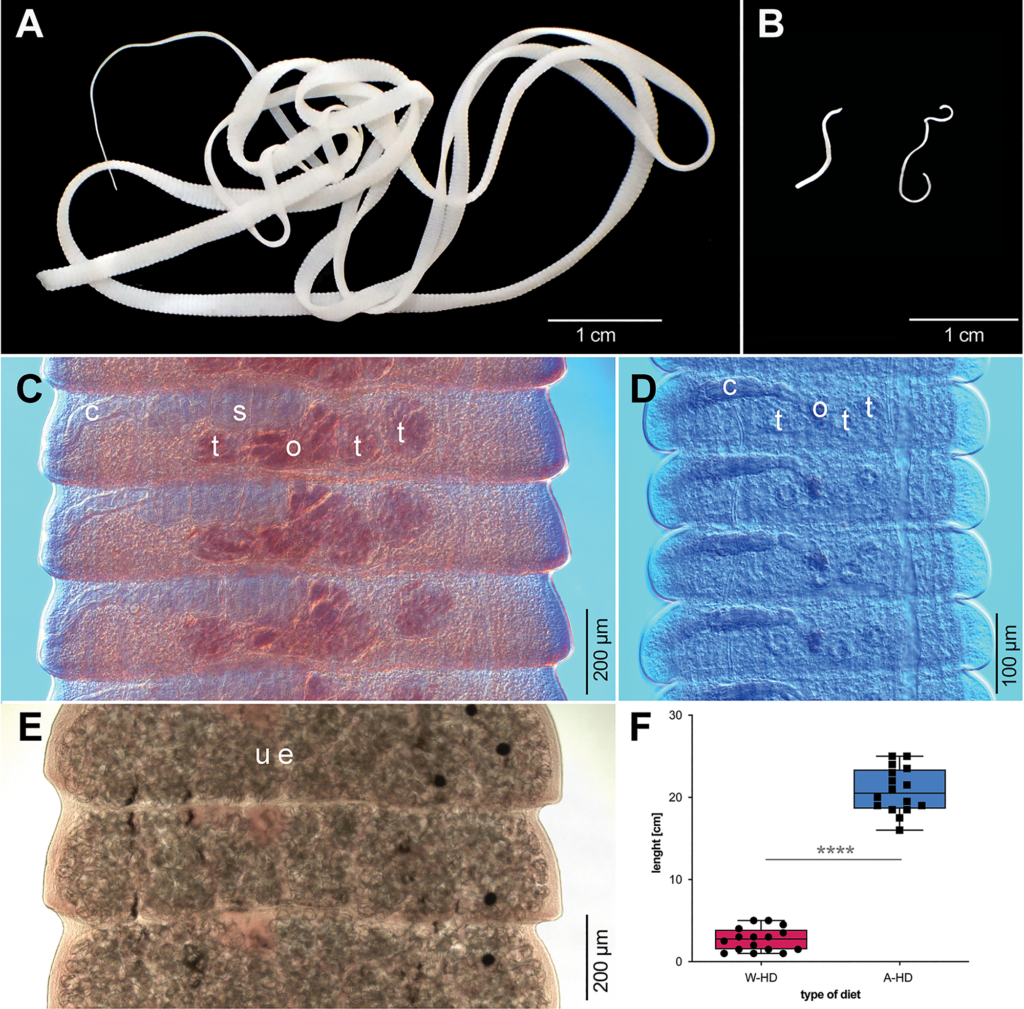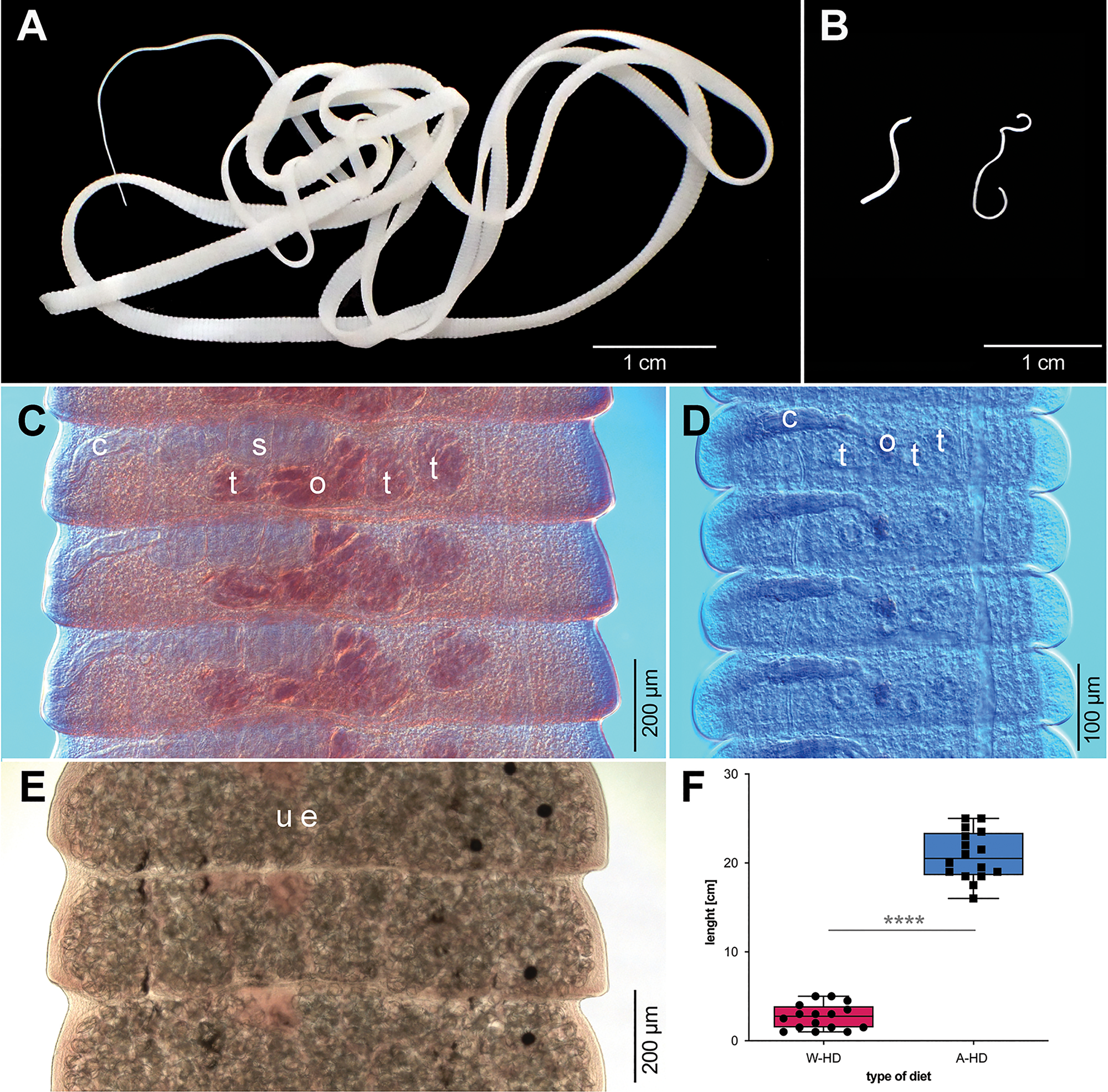
We are pleased to highlight a new collaborative study published in Nature Communications, co-authored by an international research team including Martin Moos from our laboratory. The article, “Developmental plasticity enables an intestinal tapeworm to adapt to dietary stress,” reveals how dietary fiber availability shapes the development, reproduction, and survival strategies of the intestinal tapeworm Hymenolepis diminuta. The study shows that fiber deprivation at the time of host colonization leads to developmental arrest and loss of reproduction, while short-term fiber deprivation in adult worms induces a reversible, estivation-like suppression of egg production. These findings were accompanied by pronounced diet-dependent changes in the host small intestinal microbiota and metabolome, underscoring the importance of diet in shaping host–helminth–microbiome interactions.
https://www.nature.com/articles/s41467-026-69475-0