We are pleased to highlight a new collaborative publication led by Vladimír Koštál’s group (Institute of Entomology, BC CAS), with major contributions from Martin Moos and our metabolomics team. The study provides the most comprehensive metabolomic comparison to date of cold adaptation across 43 Drosophila species, spanning tropical to boreal climates. The article is published in Journal of Experimental Biology.
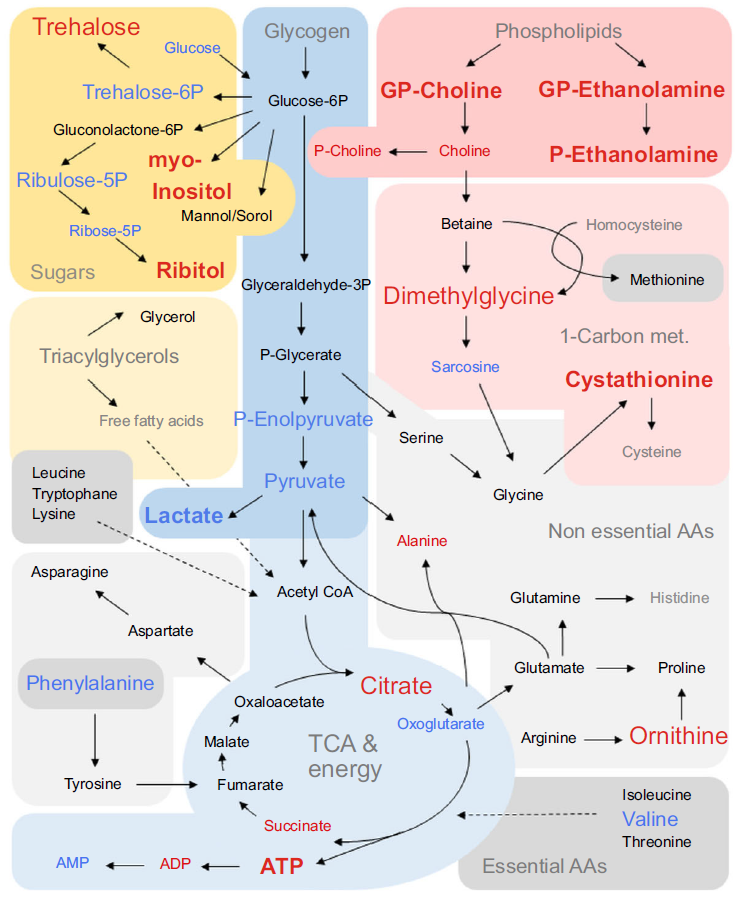
Using controlled warm- and cold-acclimation experiments, the authors combined survival assays with targeted LC-HRMS metabolomics to uncover metabolic traits linked to interspecific differences in cold tolerance. The team identified constitutive elevations of sugars and polyols (including trehalose, glucose, glycerol and mannitol/sorbitol) in species naturally adapted to cold climates, as well as a universal metabolic signature of cold acclimation: strong induction of phospholipid-derived metabolites, pointing to membrane remodeling as a core mechanism of thermal adaptation.
A particularly striking finding is the lineage-specific accumulation of myo-inositol in D. virilis-group species during cold acclimation—a classical cryoprotectant that increased up to 28-fold in D. montana. These results reveal that Drosophila species rely on diverse metabolic strategies to enhance cold tolerance, and that classical cryoprotectants are not universally required across lineages.